

1.Tadcaster Used to be a River Port
The River Wharfe was an important route for trading and transport. Stone for building was transported to York by river, down the Wharfe from Tadcaster, then upriver on the Ouse to York. In the 17th and 18th centuries Tadcaster was a port for Leeds; boats would come inland from Hull as far as Tadcaster, then the goods were taken the final stage of the journey by road to the city. Before railways and at a time when the roads were in bad condition, waterways often offered the best way of moving goods around the country.
 1906 Boat unloading at wharf above the bridge
2. The Man Who Crowned Elizabeth I Was from Tadcaster
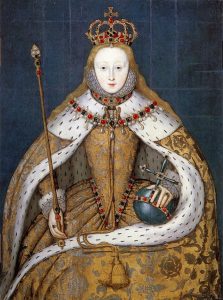
As Bishop of Carlisle, Owen Oglethorpe presided at Elizabeth’s coronation in 1559; this was the last coronation in Britain conducted under the Catholic Church’s authority. Bishop Oglethorpe was a keen scholar and was the founder of Tadcaster Grammar School, opened in 1557 as a school for boys. His role in the coronation did not save the bishop from persecution; later in 1559 Oglethorpe was punished for refusing to recognise the queen as Supreme Governor of the Church. He was deprived of his bishopric and died of apoplexy while under house arrest in London.
3. Saint Mary’s Church Has Been Rebuilt Twice
There has been a stone church on this site near the river since the mid 12th century. In the 14th century, northern England was attacked by Scots in a series of raids; in 1318 Tadcaster was raided and the church was severely damaged to such an extent that it had to be rebuilt. The second rebuilding was more recent, between 1875 and 1877, and was because of a problem we still face: flooding. Because of its location close to the river, the church was flooded time after time and this was damaging the structure. Starting in 1875, the church was carefully taken down and rebuilt five feet higher, an impressive feat.
 St Mary’s church in 1870 before rebuilding
4. A Battle Took Place Here in 1642 During the English Civil War
York was a Royalist stronghold and most of West Yorkshire was Parliamentarian, so Tadcaster was in the middle of these warring factions. Parliamentarian general Ferdinando Fairfax set up his headquarters in Tadcaster with the aim of stopping the Royalists from crossing the Wharfe and gaining territory in West Yorkshire. William Cavendish, Earl of Newcastle, commanded the Royalist forces which advanced on Tadcaster in December 1642. The Parliamentarians defended their positions in the town on 7th December, forcing the Royalists to retreat. The Parliamentarians were vastly outnumbered and were low on powder and ammunition and so they themselves retreated at night, allowing the Royalists to take the town the following day.

5. The Bridge Once Marked a Historic Boundary
The centre of the bridge marked an important boundary between two subdivisions of Yorkshire: the West Riding and the Ainsty of York. The West Riding of Yorkshire gets its name from the Old Norse word for “third” as Yorkshire was divided into three areas, the other two being East Riding and North Riding. The Ainsty was an area under the jurisdiction of York, so dignitaries travelling to York were met on the bridge in Tadcaster; several kings are recorded as being met here before going on to York, including Henry VII and James I.

6. Tadcaster Has Had Several Different Names Over the Centuries
The earliest name recorded is Calcaria, which derives from the word “calx”, Latin word for limestone. Stone quarried in our area has been a good building material and famously has been used to build York
Minster. During the early medieval period, the “Calc” part was still in the name; the 8th century author Bede referred to the town as Calcaria still, as he was writing in Latin, but he also added that the English call the town “Calcacestir”. In the Anglo-Saxon Chronicle the town is named “Táda” – this town played an important role in the events of 1066, as King Harold assembled his army here before the Battle of Stamford Bridge. In the Domesday Book of 1086, the name for the town, “Tatecastre”, is closer to what we call it today. The meaning of the place name is thought to be “Tata’s fort”, named after an Anglo-Saxon landowner. The “caster” part of Tadcaster is from “castra”, Latin for “military camp”.
Would you like to know more about our fantastic heritage? Check out the Tadcaster Historical Society website here or why not go along to one of their meetings on the first Thursday of the month. Visitors are welcome to go along for £2 each meeting or you can join the society for just £8 per year. Find out more here >
Totally Locally Tadcaster would like to thank Jim Birdsall from Tadcaster Historical Society for this blog -Thanks Jim!
If you would like to create content for Totally Locally Tadcaster to help promote our wonderful town please get in touch.